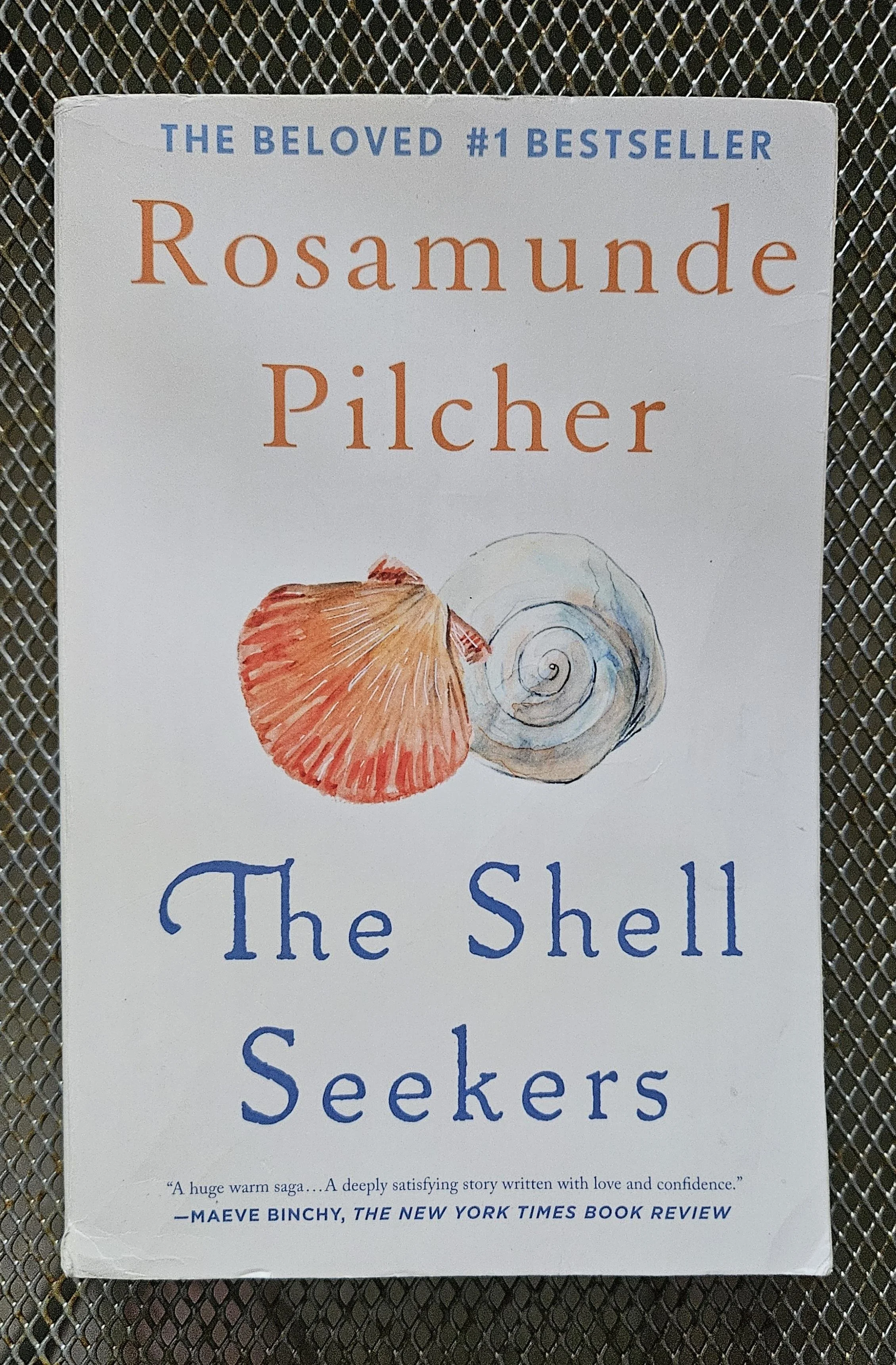
My friend Kathryn lent me The Shell Seekers, a novel by Rosamunde Pilcher that was published in 1987, the year I graduated from high school. I’m so glad she did. It’s a wonderful, multigenerational story about family, art, greed, and love. The title object is a painting that the main character, Penelope Keeling, has to figure out what to do with when she passes on. There’s so much more to the plot than that, but that’s one of the key drivers.
The copy of the book Kathryn let me borrow is a paperback published by St. Martin’s Griffin in 2015. It includes Pilcher’s introduction to the 10th anniversary edition of the novel. Ironically, one of the chief reasons Pilcher cited for writing this novel about familiar greed was that her children wanted her to make some good money after a string of novels that had sold only modestly.
As usually happens, while I was reading, I noticed a few editing-related issues I wanted to point out to my blog readers. These issues didn’t detract from my enjoyment of this fantastic work of art.
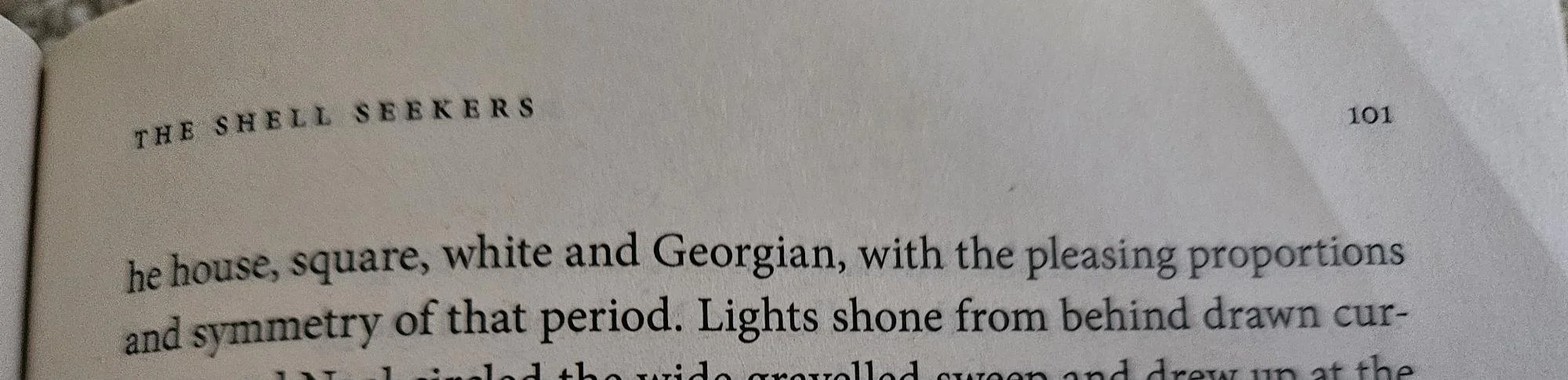
At the top of page 101, a “he” should have been a “the.” The entire sentence reads: “In the beam of his headlights he saw he house, square, white and Georgian, with the pleasing proportions and symmetry of that period.” I would have inserted a comma after “headlights” and a serial comma after “white.”

On page 168, the comma after “after” should be placed after “that” instead. (The British spelling of “meager” is used in that same sentence.)
In the next paragraph, the new-to-me word “chuntered” appeared in the following sentence: “The taxi chuntered down the dark, semi-deserted streets, and the rain poured down and it was still piercingly cold.” Merriam-Webster.com gives “mutter” as a synonym for “chunter,” so it’s used literarily, not literally, here. I would have followed M-W, which lists “semi” as a prefix not requiring a hyphen in most cases, and made it “semideserted.” I also would have inserted a comma after “down” because of the new subject “it” that follows.
“Chunter” comes up again on page 241: “The wind was light, scented with thyme, and the only sounds the occasional bark of a dog, or the pleasant chuntering of a distant tractor.” I see no need for the comma after “dog.” I would have inserted “were” or a comma to show the omission of “were” after “sounds.”
The second half of the following sentence on page 293 bothered me when I first read it: “The first rays of sunlight were slanting into her bedroom through the open window; these lay warm on the carpet, picked out the deep pink of the roses that patterned the curtains.” All I would do to it now is replace the comma after “carpet” with an “and.”

The “The” before “reached” on page 365 should be “They.”
Finally, the somewhat-strange-to-me word “a-brim” appears on page 376 in the following sentence: “The tide was high, the harbour a-brim with raging grey water.” M-W says to make that solid: “abrim.” It means simply “brimming.” (“Harbour” and “grey” are the preferred British spellings of “harbor” and “gray.”) “A-brim” comes up again a few pages later, on page 387, in the following sentence: “Since saying goodbye, she had been a-brim with the anticipation of seeing him again.”